Understanding Duty of Care for Fixed Asset Management
Live+
Company
The Loop Of Liability
Services Provided
Fixed asset management, health & safety compliance, duty of care education
Challenge
Many operators have inspection systems but fail to action findings — creating liability despite having records. The 'loop' must be fully closed to be effective.
How PSS Helped
Liability reduction, closing inspection-to-action loop, accountability framework, timestamped records, centralised data management
About the company
'The Loop of Liability' is a PSS thought leadership piece authored by Sarah Bull. It explains the legal and safety importance of acting on inspection findings — not just recording them. Includes two real-world case examples of failures resulting in injury claims.

Playgrounds

Insurance Defence & Compliance
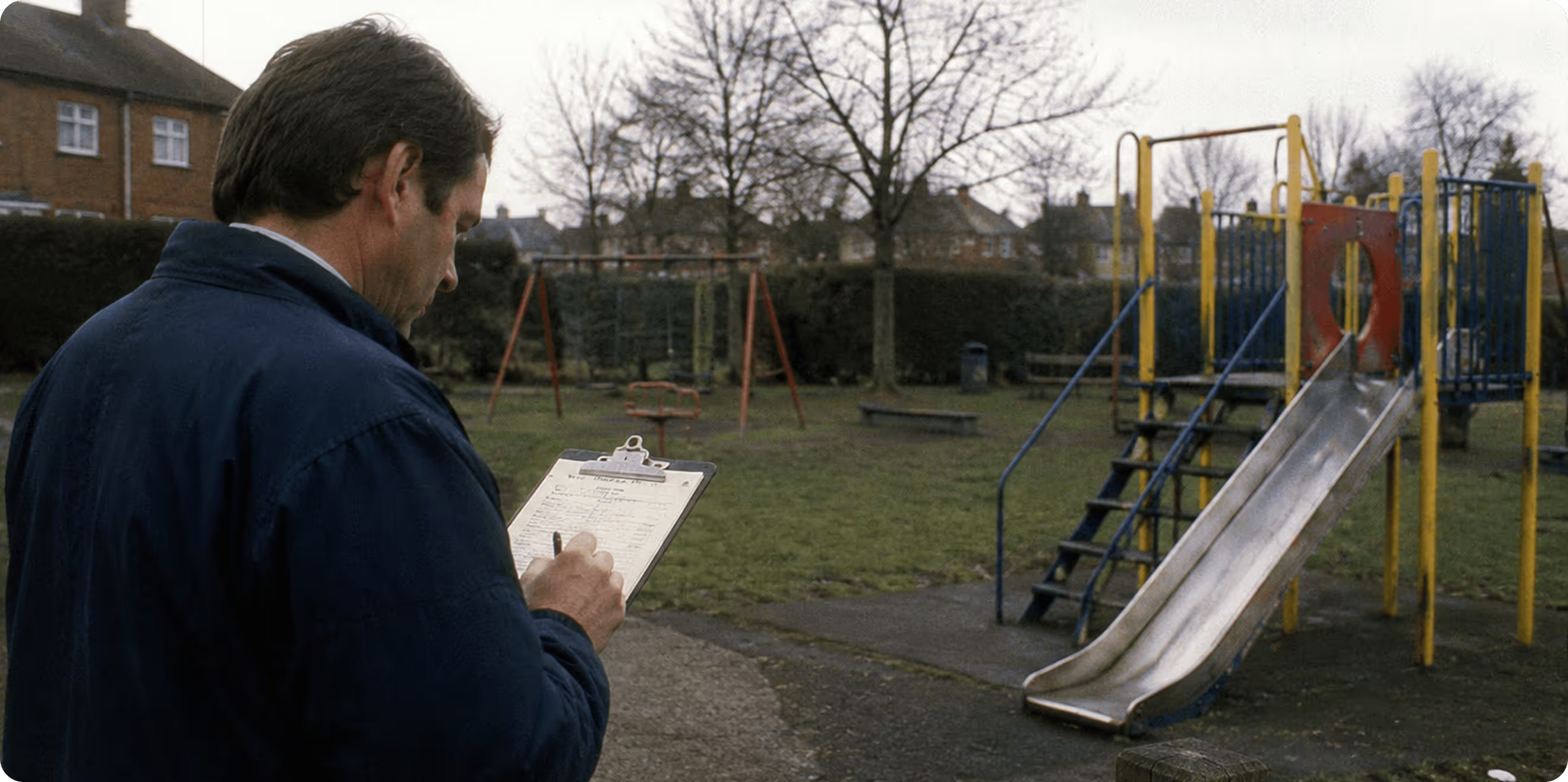
As part of an organisations health and safety management system, playground inspections are an integral element of a much wider process required to effectively manage assets and ensure compliance with legal obligations. On their own the inspections provide a valuable data source and overview of the playground equipment's condition, however, if this data is not acted upon or used for management or planning purposes, then they are a pointless exercise.
The Problem
The process is a cycle that, to be effective, reduce liabilities and ensure compliance, must be completed. In many instances, operators have fallen into the trap of ensuring that they have excellent inspection systems in place, alongside state-of-the-art reporting systems. However they then fail to have procedures in place to ensure that any highlighted issues are dealt with appropriately and in a timely manner. The goal simply appears to be one of undertaking the inspections to 'tick the box'.
In reality, undertaking the inspection and then not acting upon the results can actually leave the operator open to criticism by the operator potentially having 'guilty knowledge' that there is a problem.
The Cycle
It is time we move away from seeing the inspections process as separate from the ongoing management of the sites. Once a suitable inspection process has been established using the guidance given in the relevant British Standard, then it is imperative that this is followed by an appropriate process, to analyse the incoming information and ensure that action is taken within an acceptable time frame.
When an inspection is undertaken the inspector should not only report the fault but should provide an appropriate risk assessment and a suggested timescale for action. This information can then be used to prioritise works and ensure that the most potentially dangerous issues are dealt with in a timely fashion. Once works are completed, the date that the issue was resolved should also be recorded to provide a complete 'life-cycle' of an issue.
Real World Examples
Example A — The Cost of Inaction
The inspection identified that the chain connection points on a swing seat showed signs of wear and required attention. Over the following months the inspector continually monitored the issue identifying the deteriorating condition of the equipment components and increasing the risk associated with it. Despite this, no action was taken by the site operator and eventually the connection failed whilst the swing was in use causing a serious injury to the user. If the issue had been resolved when it was first identified this accident could have been avoided. The operator had the knowledge that there was an issue but did not act upon it.
Example B — The Cost of Not Recording
The inspection identified that there was an issue with the spring stop on the terminus of a cableway. Whilst the issue was effectively resolved by the site operator, the actual date that the maintenance work was undertaken was not formerly recorded. When a claim for compensation was made following an accident on the unit, whilst the operator was confident that the repairs had been undertaken before the accident, there was no documentary evidence available to corroborate this.
Closing the Loop
Whether using paper records or an electronic system, it is vital that the data is managed centrally with a named individual being responsible and accountable. This can then ensure that every inspection recorded is reviewed and assigned for appropriate action, that every action completed is recorded and that all data is clearly date and time stamped. In addition, every person involved in the process should be appropriately competent/trained/accredited for the role that they fulfil and they must understand how they contribute to the wider process. Everyone has a part to play.